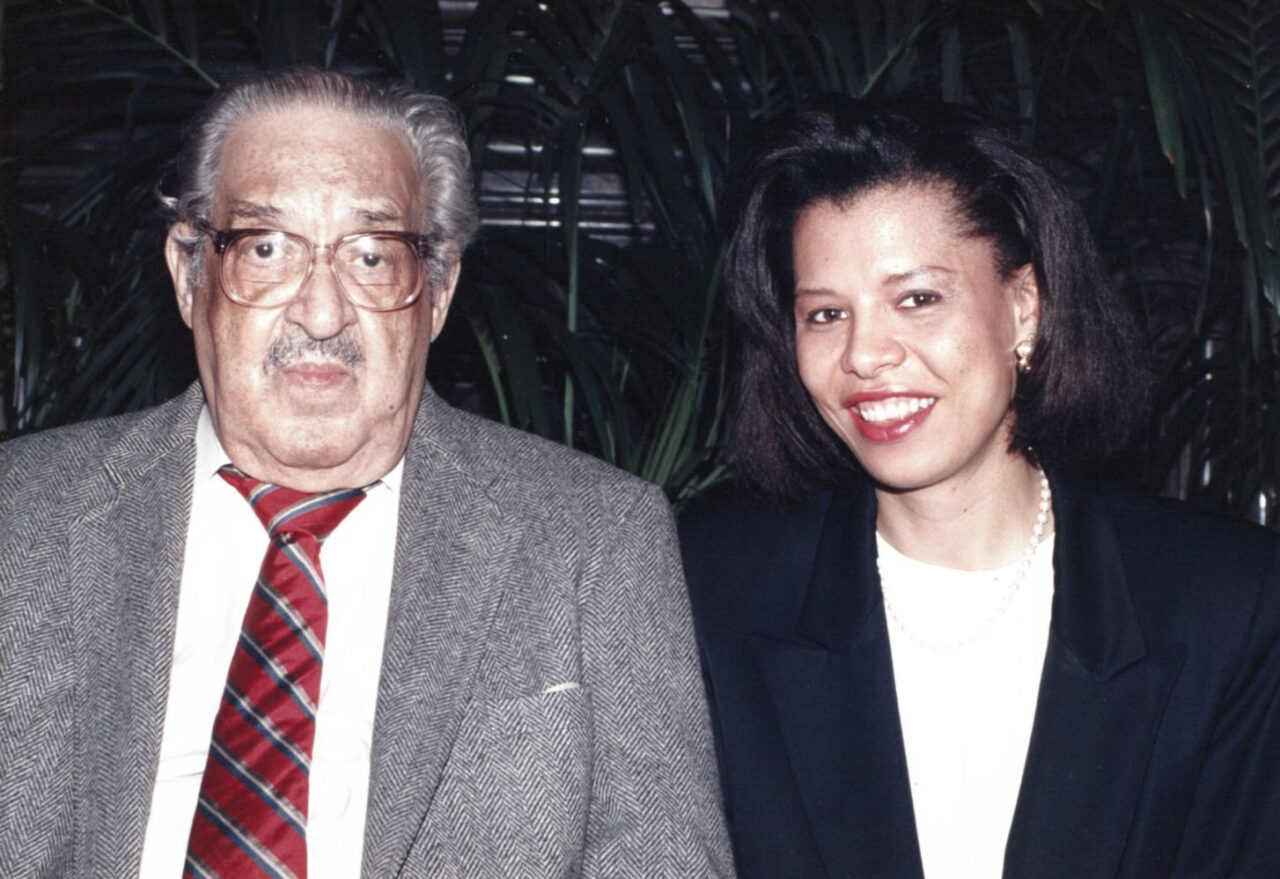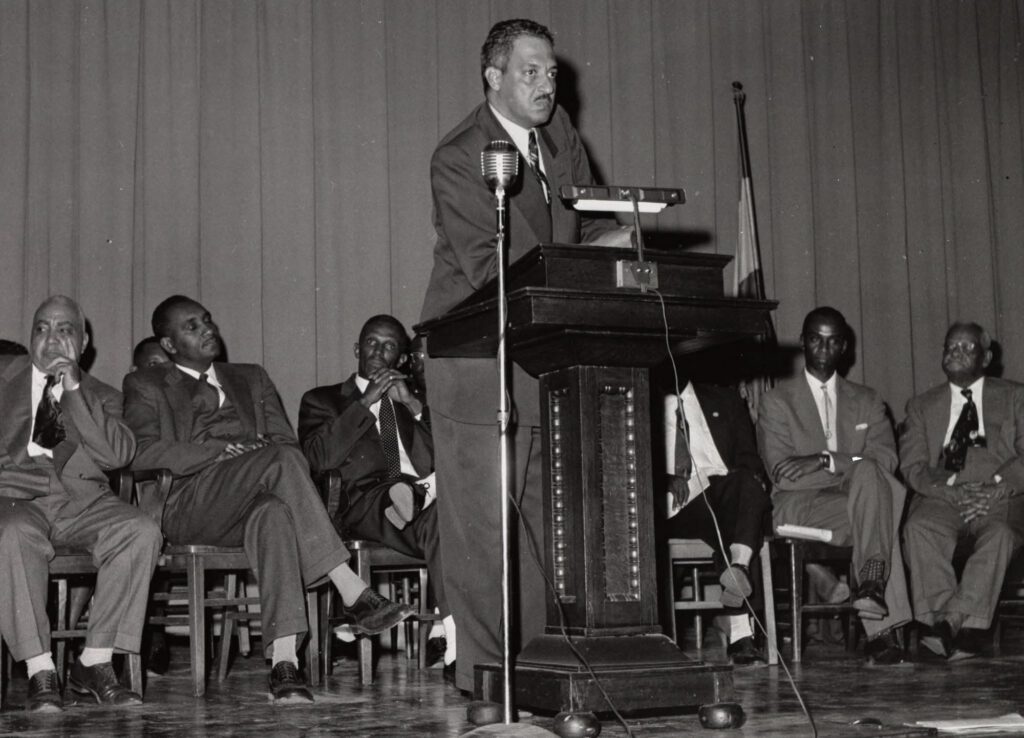
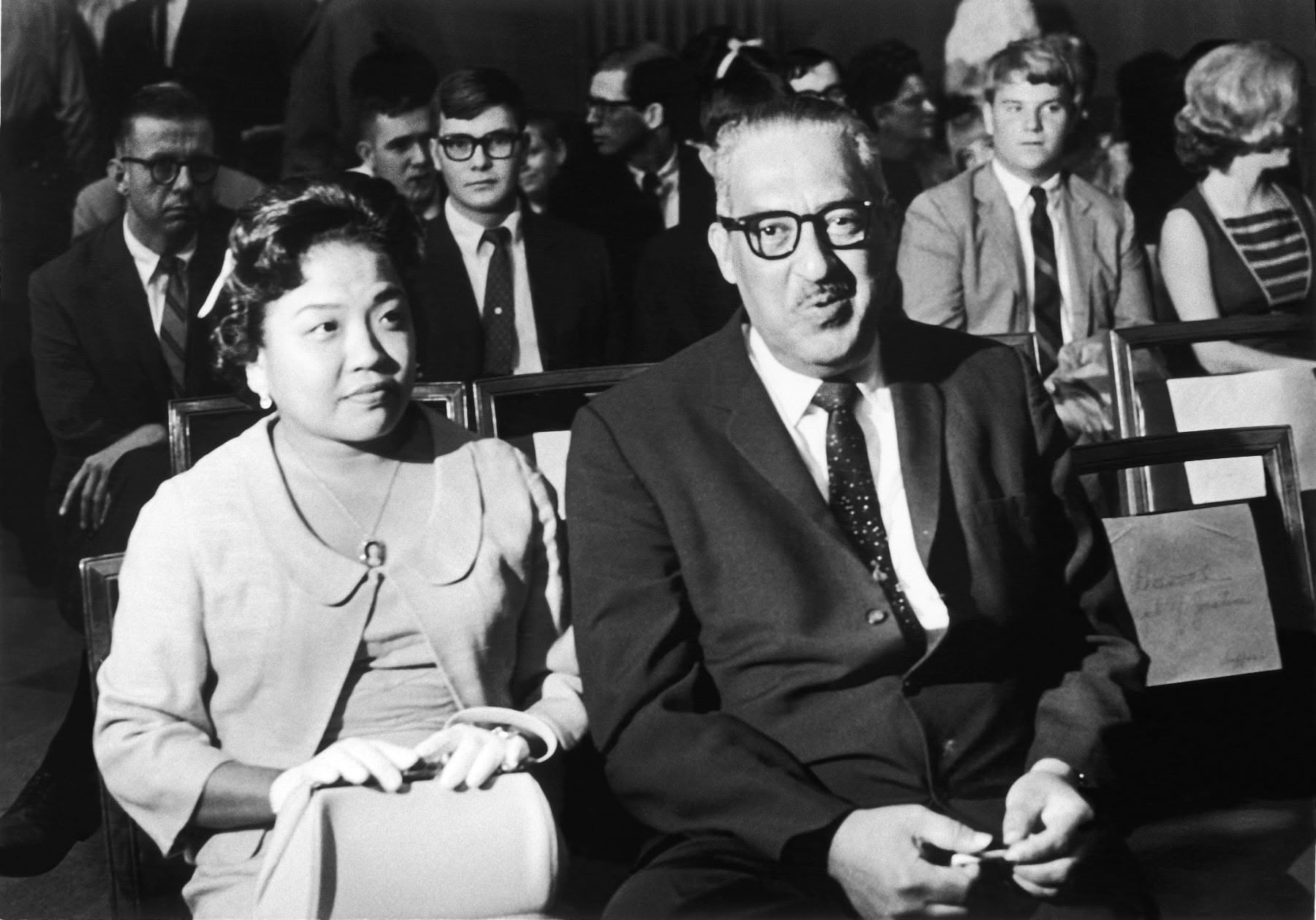
Some years back I found myself traveling throughout the South, going into towns and cities once visited by the legendary lawyer Thurgood Marshall. During his heyday Marshall was trying to dismantle, through the state and federal court systems, the hard rock of white supremacy in America. From South Carolina it was onto Mississippi, and from there, Florida. Then I ventured into Texas. During my travels I sat with men, women, retired lawyers and even judges who told of having met Thurgood, of having witnessed firsthand his legal acumen and his bravery. White mobs wanted to murder him – as they had murdered some of his close friends – all for trying to bring justice to Black Americans.
There have been years across the calendar of time that Blacks have taken special note of: In 1865, slavery was outlawed. Thirty-one years later, in 1896, came the United States Supreme Court case, Plessy v. Ferguson, which decreed a doctrine of separate but equal, a brutal ruling consigning Blacks to second-class citizenship. In 1909 the NAACP was founded. In 1948 President Harry Truman desegregated the American military, though by Executive Order and not the will of the American people. Black progress has never come fast. Lynchings and bloodshed marked the path, as Thurgood Marshall knew.
Then came 1954.
Thurgood Marshall and a cadre of civil rights lawyers finally got their case, Brown v. Board of Education – a school desegregation case – before the United States Supreme Court. The court ruled unanimously that year to upend public school segregation in America. To knock down, as it were, Plessy v Ferguson, the separate but equal decision. The weight of the ruling shocked segments of white America, unwilling to imagine a land of liberty and justice for all.
If you were Black and born in 1954, as I was, that year would come to constantly lay on your consciousness. You wrote the year down – your date of birth – on all kinds of forms: schools, doctor visits, job applications.
Yet, during my junior high and high school years, the colossal impact of the Brown decision wasn’t mentioned. It was as if the American teaching machinery had wished to erase the battles that led to the Brown decision. After all, to discuss Brown was to give way to discussions about America’s original sin, slavery, and the savagery around it. In college I took a constitutional law course. I remember thumbing through the course book expecting to see a section on the genius of Thurgood Marshall. It was not there.
In that aforementioned year of 1954, my mother actually had two new mouths to feed: She gave birth to twins, myself and my sister. I have imagined her cooing to her twins at the time that life was going to get better, that some lawyer whose name she certainly saw in the headlines had changed America.
There would be, before and after 1954, other landmark Thurgood Marshall-led courtroom victories, in housing, voting rights, criminal justice. Those victories would lay the groundwork for President Lyndon Johnson’s titanic civil rights bills of 1964, 1965, and 1968. In 1967 President Johnson nominated Marshall to become the first Black on the US Supreme Court.
It was a bruising battle to get Marshall confirmed, with Southern Democrats, segregationists, mounting the opposition. The story of that court battle became the topic of my Marshall book. He would remain on the court for 24 years.
Long before he stepped down from the high court in 1991, Thurgood Marshall felt its conservative tilt. He wrote scores of blistering dissents.
The John Roberts Supreme Court has vigorously curtailed the rights of Blacks and women in a series of court decisions that have alarmed those who care about equal rights. Only three of the nine justices on the 2025 court’s makeup would undoubtedly have aligned with Thurgood Marshall’s legal philosophy. President Donald Trump – who appointed three of the six conservative justices during his first term – has issued a spasm of Executive Orders in his second term which have attacked Black advancement in the federal government, military, and in higher education. Not since the segregationist administration of Woodrow Wilson has America witnessed such an aggressive White House attack aimed primarily at the Black populace.
There are surely young men and women in law schools now studying the legacy of Thurgood Marshall, emboldened by the arc of his astounding journey in life. Equality was his mantra. We need a thousand more Thurgoods now.
Wil Haygood, a John Simon Guggenheim Fellow, is the author of “Showdown: Thurgood Marshall and the Supreme Court Nomination that Changed America,” which won the Scribes Book Award, given annually since 1961 to the best work of legal scholarship published in America.